
Hobby or Business? Significant Tax Implications of Both
Jul 14, 2015
Who knew you had a green thumb? You started gardening as a way to de-stress. Now, you’re growing exotic orchids in your family room. It was a pricey hobby until you learned how to propagate orchids and started selling them to other hobbyists. And now you’re thinking you might be able to turn growing orchids into an income source — and your hobby into a business.
O nce people start making money from their hobbies, they frequently start to deduct all of their hobby-related expenses. At this point, the IRS can become very interested in the nature of the taxpayer’s hobby/business. There are certain tax guidelines to keep in mind.
Deducting Expenses
If you earn income from your hobby, you generally can deduct bona fide hobby-related expenses up to the amount of the annual income your hobby generates. You must itemize to claim the deduction. Hobby expenses fall into the “miscellaneous” category, so they are grouped with any other miscellaneous expenses you have, and only the amount exceeding 2% of your adjusted gross income is deductible.
These restrictions don’t apply to business expenses. If you operate an active business, your business-related expenses generally will be deductible, even if they exceed your business income (limitations apply).
Passing the Test
The IRS won’t just take your word for it. It has a set of guidelines to determine whether a hobby qualifies as a business. First and foremost, you must be pursuing the activity with the goal of making a profit. If you’ve made a profit in three of the last five years (two of the last seven if your activity is horse breeding, showing, or racing), the IRS assumes you had a profit motive.
If you don’t meet the profit criteria, here are a few of the other questions the IRS may ask:
- Do you keep accurate books and separate your venture’s finances from your personal finances?
- Do you spend significant time and effort carrying out the venture?
- Does the activity involve a significant element of personal pleasure or recreation?
If you are not sure whether your hobby is a business, or you have questions about the criteria provided by the IRS, give us a call. We can help you accurately determine your expenses and ensure you are filing your taxes appropriately.
Categories: Other Resources
Key Performance Indicators Must Mean Something
Jul 10, 2015
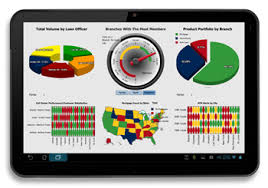 I’m currently working with the CFO of one of my more recent clients to try to develop a dashboard with key performance indicators for the owners use. This owner has a rapidly expanding business that is very profitable but she is relatively inexperienced with the accounting process and accounting terminology.
Accordingly, a lot of what the CFO and I do is to present information to the owner in a fashion that makes sense to the owner without using a lot of technical accounting jargon.
When we began the process of developing a dashboard for this owner, we prepared a list of the subjects that we thought would be of interest to the owner. Those subjects included sales, staffing, cash collections and cash payments. We also decided that the most important question we can ask the owner is what questions are left unanswered in your mind at the end of the month after you review the reports that the CFO and the outside cost consultant have prepared for your review.
The results of my meeting with the owner were surprising to me, mostly because of the direction that the owner wants to head in related to preparing the dashboard. The owner did agree that most of the subjects that we came up with as likely to be of interest to her did in fact make her list as to those items that she wanted to see. However, she had significant changes from what I thought might be the traditional accounting approach.
On the sales category, she of course wanted to see sales history, but she was also far more interested in future sales already booked and what is necessary to sell in the future to be sure the company makes her annual sales goals. Part of the dashboard has to be historically how has the company done for the current month and year-to-date reaching its sales goals, but then a forward-looking component as well. This future looking would need to addresses what sales have to be added by month beginning with the next most recent month and going through to the end of the year to maintain the originally intended sales goal. This will require some more work on the part of the CFO to classify sales both currently and in the future so that that portion of the dashboard will be meaningful to the CEO.
Also important to the CEO is the staffing levels required to meet those sales goals. Currently this business does not have a staffing model in place to anticipate capacity available and compare that to sales required to meet monthly and annual goals. This company is rapidly growing and is in the service industry so that individual professional talent is fundamental to meeting service requirements as well as maintaining the highest level of technical expertise and quality required in this business. The CFO had been working on a staffing model to help provide this information but now will have to focus more attention on that model because the CEO cannot possibly meet sales goals if the company is not correctly staffed to take on additional capacity as it is booked.
Quite surprising to me was the CEOs significant disinterest in cash receipts. In this business, her services are in such demand she’s schedules her sales arrangements so that payments will be in advance of services provided. So bills set out and cash received for July 1st are in effect to pay for July services. As a result, if payments are not timely received, services are withheld and no progress is made on the customers project. The end result of this level of sales structuring is that there is no significant shortfall in cash receipts. The activity level on cash inflow of course needs to be monitored which is the CFOs job but it does not rise to the level of immediate concern to the CEO.
The last item that she was interested in is cash disbursements. She of course recognizes that there are two components to available cash when and in what amount are receipts received and when and what amount is cash dispersed. We have put in place a budget for 2015 on cash disbursements and although it is not a zero-based budget or one in high detail for that matter, it will provide a reasonable tool to benchmark cash outlays on a go forward basis. The CFOs intention is to build that into the cash disbursements model for the dashboard and further analyze cash disbursements in future years so that that component of the dashboard will even be more detailed than it is today.
We believe the suggested changes above will more than meet the CEOs request for relevant data to the management of the company and provide actionable data which will allow her to manage this company and maintain the growth she has experienced thus far. It is important that we tailor this dashboard to the needs we know the CEO has, but also to encourage her to analyze additional information that we know is critical to her success.
Categories: Cost Accounting
New Tax Cuts Approved By Governor Kasich
Jul 09, 2015
Just over a week ago, a two-year, $71.2 billion state operating budget was signed by Ohio’s Governor, John R. Kasich. This bill will provide income tax cuts for small businesses and individual taxpayers beginning in the 2015 tax year. Impending changes as a result of the new budget include:
- Taxpayers may deduct the lesser of 75% of small business income or $187,500 ($93,750 per spouse) if the annual business earnings are less than $250,000. Taxes are to be eliminated for these small businesses altogether by 2016.
- Small businesses earning over $250,000 will be taxed at a flat rate of 3%.
- Individual income tax rates will be lowered to 0.495% for individuals earning less than $5,000 of income and max out at 4.997%.
- The exemption for tangible personal property of a qualified energy project using renewable energy resources has been extended from 2016 to 2021 – as long as the property meets all necessary requirements. In order for the exemption to be extended, the tangible personal property was exempt beginning in tax years 2011 through 2021 and the property’s certification must not have been revoked.
- Municipal corporations and townships are permitted to levy a tax on sales in the tourism development district. This tax will be paid by the person making the sales at a rate of 0.5%, 1.5%, or 2% of gross receipts from sales within the tourism development district.
- The tax on the use, consumption or storage of cigarettes will increase by $0.35 to $1.60 per pack.
After vetoing 44 provisions, most of which would have provided benefits to large businesses and industries, Kasich’s new budget will provide an overall 6.3% income tax cut in 2015 as part of a $1.9 million net tax reduction. Along with income tax cuts, the bill is expected to increase funding to schools grades kindergarten through 12 and police training. In addition, it requires all state colleges to propose ways to cut student costs by at least 5%.
Additional information regarding Ohio’s new operating budget can be found here.
By: Halie Baker, Staff Accountant
Categories: Other Resources
Overtime Pay Proposal
Jul 07, 2015
 Recently President Obama announced a major change in labor laws by introducing a proposal to update rules that would extend overtime pay to almost 5 million workers. Below are a few important points that are part of this proposal:
- The threshold for salaried employees who are guaranteed overtime is proposed to increase from $455/week or $23,660/year to $970/week or $50,440 per year beginning in 2016. This new proposal guarantees overtime to equal the 40th percentile of weekly earnings for full-time salaried employees.
- Minimum wage and overtime pay will be extended to almost 5 million workers within the first year of the proposal.
- Millions or workers and employers will be provided more clear definitions of who should actually be receiving overtime pay.
- Salary threshold for overtime pay will be adjusted automatically for inflation or wage growth over time.
This new proposal is estimated to cost new employers between $240 and $255 million per year in direct costs, according to the Obama administration. The administration plans for this proposal to be adopted by the end of 2015, resulting in implementation by January 2016.
By: Kristin Metzger, CPA
Categories: Other Resources
Variance For Scrap Portion Of Raw Material
Jul 07, 2015
Last week, I was at home during a weekday getting some much-needed work completed around the house. The home next door has been vacant due to the unfortunate passing of the elderly man who once occupied the house. His children have finally decided to do something with the home and have been cleaning it out, utilizing a dumpster for remnants. They had some older propane tanks which no one wanted, so they were giving them away to be scrapped. I noticed the tanks sitting out by the street and thought I could smell some kind of odor. Sure enough, within a few minutes a police officer drove by and quickly turned around. She asked the people working around the home why the propane tanks were sitting at the street with the valve open. They explained they were being scrapped, but could only be scrapped if the tanks were empty and they were draining them. She quickly informed them this was not permitted. I am not sure what they ended up doing with the tanks as I went about my business, but it was evident that scrapped tanks were of greater value than the propane gas itself.
 Do you work in an industry where scrap is a large part of your everyday process? Scrap values for some items are quite high and can be a big temptation for theft. It also can be a lucrative addition to a business, especially when that material would just be thrown out anyway.
What safeguards do you have in place against this scrap? Chances are if your scrap is valuable the material itself is valuable, then minimizing scrap is also important.
Are you reporting material usage variance every day, twice a day, every hour? Have you confirmed there is not an issue in the process or the material causing significant waste, which equals dollars lost? Do you weigh the scrap and have checks to make sure none is skimmed off the top after production? Do you report a variance specifically for scrap?
If you have a significant amount of scrap, then having setting standards is not unrealistic nor unreasonable. Scrap could be a large part of your material usage, cost, and potential profits. Therefore, it should be maintained and reconciled. An excellent way to account for such is to implement a standard for the scrap which you can compare to the actual scrap. Any significant variances in either direction would need to be accounted. Any large excess could be issues with production. Any large decrease could be a sign of theft.
What do you do to account for scrap?
Categories: Cost Accounting