

Looking to Sell?
Aug 04, 2016
 Are you looking to sell your business? Maybe you’re considering retirement, in poor health, or just ready to cash in. Whatever your reason, you should be aware of the complexity of your venture, as well as the tax consequences that come along with it. The very first step should always be consulting with your WVC adviser. You can obtain an accurate business valuation and develop a tax planning strategy to minimize capital gains, and any other taxes from the sale, to maximize your profits.
Most business owners do not know how much their business is worth. This can result in severely under or overestimating a proper selling price. Obtaining a third party business valuation allows owners to sell at a price that is realistic for potential buyers, while maximizing the total value and profit at the same time.
As a business owner, you may think of your business as a single entity sold for one lump sum. However, it is actually a combination of assets to be sold that will be subject to different taxes under federal and state laws. The IRS requires each asset to be classified as capital assets, depreciable property used in the business, real property used in the business, goodwill or property held for sale to customers. The gain or loss on each asset is figured separately, classified as capital or ordinary, and taxed accordingly.
The sale of depreciable property can be tricky. Section 1231 gains and losses are the taxable gains and losses from the sale or exchange of real or depreciable property held for longer than one year. Whether you have a net gain or loss from all 1231 transactions determines if they will be treated as ordinary or capital. When section 1245 or 1250 property is sold at a gain, you may have to recognize all or part of the gain as ordinary income due to depreciation recapture rules. The remaining gain would be considered a 1231 gain.
The way a business is taxed when sold also depends on the business structure. “Pass-through” entities such as sole proprietorship, partnerships, and limited liability companies are required to sell each asset separately. This provides much more flexibility when structuring a sale to benefit both the buyer and seller with regard to tax consequences.
Corporations and s-corporations are subject to more complex regulations when selling assets and stock. For example, when a corporation is sold, the seller is taxed twice for all assets. The corporation pays any gains tax when the assets are sold, and the shareholders pay capital gains tax when the corporation is dissolved. On the other hand, s-corporations are only taxed once. Income or loss flows through to the shareholders who then report it on their individual tax returns.
Are you thinking of selling your business soon? Our team of business valuation and tax planning experts can help you make the most money with the least amount of consequence.
-Halie N. Baker, Staff Accountant
Categories: Other Resources
Seasonal Business Considerations
Jul 07, 2016
If you have a seasonal business, you may face challenges typically not encounters by a year-round businesses. After all, attempting to squeeze a year’s worth of business into a far shorter period can prove to be hectic. Here are some tips to help you deal with demands of owning a seasonal venture.
Cash Control All small business owners have to be careful cash managers. Strict management is particularly important when cash flows in over a relatively short period of time. One very important lesson to learn: Control the temptation to overspend when cash is plentiful.
Arming yourself with a realistic budget and sound financial projections, including next season’s start-up costs, will help you maintain control. In addition, you may want to establish a line of credit just to be safe.
In the Off-season It may be difficult to maintain visibility when you are not in business year round. However, continued marketing efforts and periodic updates via e-mail or snail mail can dramatically impact your client base. Such marketing efforts can also help you develop new leads and new business. When you re-open for the season, you will certainly want to announce the date well ahead of time. Maximize your efforts by utilizing social media to expand your reach.
 Time for R and R Take some time for rest and relaxation, you deserve it. Nevertheless, you will also want to use this time to make any necessary repairs and take care of any additions or modifications. You can also use the off-season to shop around for deals on items you keep in stock and/or equipment you need to buy or replace.
Expansion Plans If you’re thinking of making the transition from “closed for the season” to “open all year,” start investigating new product lines or services. If you diversify in ways which are complementary to and compatible with your core business, your current customer base may provide support right away. A well-thought-out expansion can be the key to a successful transition into a year-round business.
Being the owner of any type of business has its rewards — and its challenges. We significant experience working with small business and would be happy to assist in any possible.
Categories: Other Resources
Disaster Recovery Planning: Protecting Your Business
Jun 27, 2016
Fire, floods, hurricanes, earthquakes. When they happen, they can destroy buildings, equipment, and hard-to-replace data, and even injure or kill employees. It can take a business weeks, sometimes months, to resume operations after a disaster. Some businesses never recover. You can’t pin down the time or day when a disaster may strike your business. However, you can certainly prepare for one. Preparing for a disaster can minimize the potential damage and may protect you and your employees from harm.
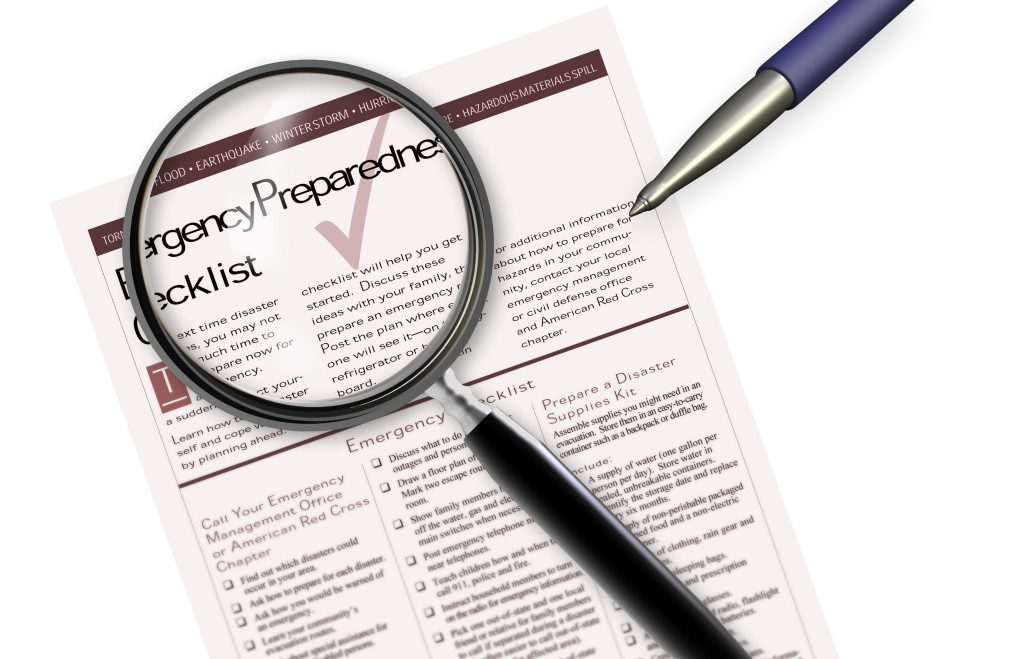 Knowing what to do if a disaster strikes your business is half the battle. Savvy business owners draw up a disaster plan and update it regularly. They consult with experts and draw on the lessons learned from the past. Moreover, they designate alternate business sites, emphasize data preservation, and ensure that the business’ insurance coverage is sufficient.
Drawing Up a Disaster Plan If your business does not already have a disaster plan, now may be a very good time to develop one. Consider forming a disaster planning committee and assign it the task of crafting and implementing a disaster plan for your business. Give committee members the opportunity to attend seminars, meet with experts, and take training courses related to disaster planning.
If your disaster plan is to have any value at all, it must, at a minimum, outline in detail all of the steps managers and employees need to take if disaster hits your business. An effective and workable disaster plan should cover personnel safety and management succession.
Personnel Safety and Management Succession
An effective disaster plan should clearly identify safety areas for employees as well as an evacuation route. Specific individuals should be responsible for confirming that all employees have reached the safety area. The plan should outline a chain of command, indicating the responsibilities and duties assigned to each manager or employee during a disaster.
A list of emergency phone numbers — hospitals, doctors’ offices, and the company’s lawyers and accountants — is an important part of the plan. Be sure to include the home phone numbers of employees and the names of family members who can be contacted in an emergency.
Ensuring management continuity after a disaster should also be a top priority. That requires establishing procedures that detail the responsibilities and duties of each member of the management team in the days and weeks after a disaster. The procedures should clearly define a line of succession and give instructions on how to communicate any changes or information to employees, customers, vendors, and professional advisors. Creating and implementing these procedures helps keep your business operational during a difficult time.
Alternate Business Sites Getting your business up and running after a disaster is much easier if you have an off-site facility for storing backed-up data vital to your operations. You’ll need to be able to access customer and vendor lists, accounts receivable records, and other critical records if you are to resume operations quickly. Make sure you identify and classify corporate data according to its importance and begin to back it up as soon as possible.
It may be worthwhile to look into alternate business sites, essentially office complexes with computers, work areas, and phones. When disaster strikes, you move your personnel to the alternate site.
Insurance Coverage Review your business insurance policies to identify any potential shortcomings in your coverage. Business interruption insurance, which compensates a business for the loss of operating income when normal operations are disrupted by disaster, is a key element in business insurance planning. Take the time to periodically reexamine your business’ umbrella liability, fire, vehicle, and property insurance. Keep several copies of all your policies at different locations.
Don’t Let Your Plan Gather Dust Make sure key employees receive a copy of the disaster plan. Keep it updated. Practice emergency drills. A proactive approach can potentially minimize the impact of a disaster.
Categories: Other Resources
Tax Implications Of A Divorce
Jun 24, 2016
Divorce can be stressful enough without discovering down the road the assets weren’t divided equitably even when spouses were in agreement about the division of their property. Failing to take taxes into account may be to blame when one spouse receives a smaller net share than expected.
Here are some issues to consider if divorce is on your horizon.
Taxable or Not Taxable?
 Payments from one spouse to the other can have tax consequences for both spouses depending on how the payments are designated. Alimony generally is deductible by the spouse who pays it and is taxable to the recipient. Child support isn’t tax deductible by the person paying it nor is it taxable income to the recipient.
Who Claims the Exemptions?
The IRS has specific rules for determining which spouse is entitled to claim the dependency exemptions for the couple’s children. Who claims the exemption can also affect eligibility for certain tax credits, such as the child tax credit. Typically, the custodial parent claims the dependency exemption. However, parents can also choose to alternate claiming the exemption. And couples with more than one child may decide to split the exemptions.
The QDRO and Retirement Benefits
A qualified domestic relations order (QDRO) is a court order that specifies the property rights regarding qualified retirement plan assets of a spouse or dependent during a divorce. A QDRO allows the transfer of all or a portion of the assets in a qualified retirement plan from one spouse to the other without loss of the plan’s tax advantages. A QDRO should be carefully executed to avoid costly mistakes.
What’s Its Future Worth?
The value of assets that seem equal may no longer be equal once taxes come into play. Selling an asset in the future may create a tax liability. So spouses will need to consider more than current value when dividing investments and similar property.
Issues related to dividing assets during a divorce can be complex. Couples should seek professional advice.
Categories: Other Resources, Tax Compliance, Tax Planning
Protect Your Business with a Buy-Sell Agreement
Jun 22, 2016
The unexpected can always happen. That’s why, if you’re the co-owner of a business, you need to prepare for the possibility that you — or the other owner — won’t be at the helm one day. The fact is, either of you could die tomorrow. What would happen then?
 When you enter into a buy-sell agreement, you face this issue head on. A buy-sell agreement is a legal contract between you and the company’s other owners. In it, you each agree that your ownership interest will be sold (or offered for sale), at a certain price, to the company or to each other when you die. Often, the company or the owners buy life insurance policies so they’ll have the cash to make any agreed-upon purchase.
Tax Advantages Buy-sell agreements offer more than simple protection for you and your family. You may also gain estate-tax benefits. Your estate can usually value your business interest according to the price or formula set in the agreement. This lets you plan in advance for what that value will be.
Buy-sell agreements can also help your estate avoid time-consuming and costly battles with the IRS. When an estate includes a closely held business interest, the IRS may see a red flag. The IRS wants to be sure that estates don’t come up with artificially low values for businesses in order to save taxes. If you have a buy-sell agreement in place, and follow all the tax law rules, the IRS is likely to accept your value.
What’s Your Interest Worth? The key to making the value in your buy-sell agreement stick is to make sure that it is a “fair market” price. If you and the other owners aren’t relatives, this shouldn’t be a problem. You’ll probably bargain with one another to get the best deal possible. However, if you intend to pass your interest in the company on to a child or other family member, the IRS may argue that you and your close relative didn’t negotiate a fair price. That’s why it may be best to provide in the buy-sell agreement that a qualified professional will value the company annually or at the time of the sale.
Our team of business valuation experts can help you plan for the future through a buy-sell agreement. If you have questions or concerns about your business, contact Jack Hagmeyer at hagmeyer@wvco.com
Categories: Other Resources