
Scrap Cost Controls
Jun 19, 2015
On a recent job costing assignment, we were working with a manufacturer which had significant portions of raw material that was unable to be used in the final product. This unused product became scrap, and since there was quite a bit, the scrap factor was very high. As a result, management was very interested in how much scrap was being created because even small improvements in the operation could result in significant reductions in product cost.
The high scrap factor combined with high scrap metal prices made accounting for the scrap very cost effective. In this case, management was interested in all types of controls related to the production of scrap and the accounting for scrap. They hoped these controls would maximize the resale value of scrap being created, as well as, help minimizing scrap being produced in the manufacturing process.
They separated the raw material variances from just cost and efficiency to include a standard scrap allowance. This was measured as frequently as were efficiency variances.They also included a process to precisely weigh scrap at the end of each shift. Prior to this, they had approximated scrap weight at the end of a 24-hour period by simply estimating scrap created and disposed of based on the size of the container and the quantity estimated to be in the container.
 As part of the new costs process, they instituted a policy of weighing each container of scrap metal at the end of each shift. This allowed them to precisely correlate scrap produced in relationship to product produced. They were then able to estimate the amount of revenue that would be created by the scale of scrap particularly when scrap metal prices were so high.
The entire goal of this process was to improve overall profitability by directly assigning the responsibility of scrap produced to the shift supervision.
A few years ago, we experienced similar circumstance with a much larger food producing client. In this case, the manufacturer had developed a new process for minimizing waste on raw product entering the manufacturing process. This new proprietary process carried with it the hope of significantly reducing the amount of waste created at the start of the process for this product. Substantial resources were expended developing this new process, so management was interested to learn how much savings were to be created. Waste in this process was always reasonably estimated before, so management imposed new restrictions whereby all waste containers had to be weighed as they were being filled and removed from the production line. As a result, the accuracy of the waste counts improved and clearly pointed out the improvements in minimization of waste by this new scrap or waste processes.
Both of these examples point out the need to constantly improve your accounting. Remember what gets measured must get managed.
Categories: Cost Accounting
Evaluating the Necessity of Your Manufacturing Reports
Jun 16, 2015
In today’s world, there are many unnecessary and frivolous items. Yet, there are many items in which we couldn’t live. Some things are lifesaving and others are just really unique items that make our lives so much easier. How many times have we seen an item that is so neat and we didn’t even know we needed it but wondered how we lived without it? I often wonder, why didn’t I think of that!
Reporting is not something you cannot live without, however, I would argue your business cannot live without reports. What kinds of reports? Are your reports lifesaving or unnecessary? Have you thought about it?
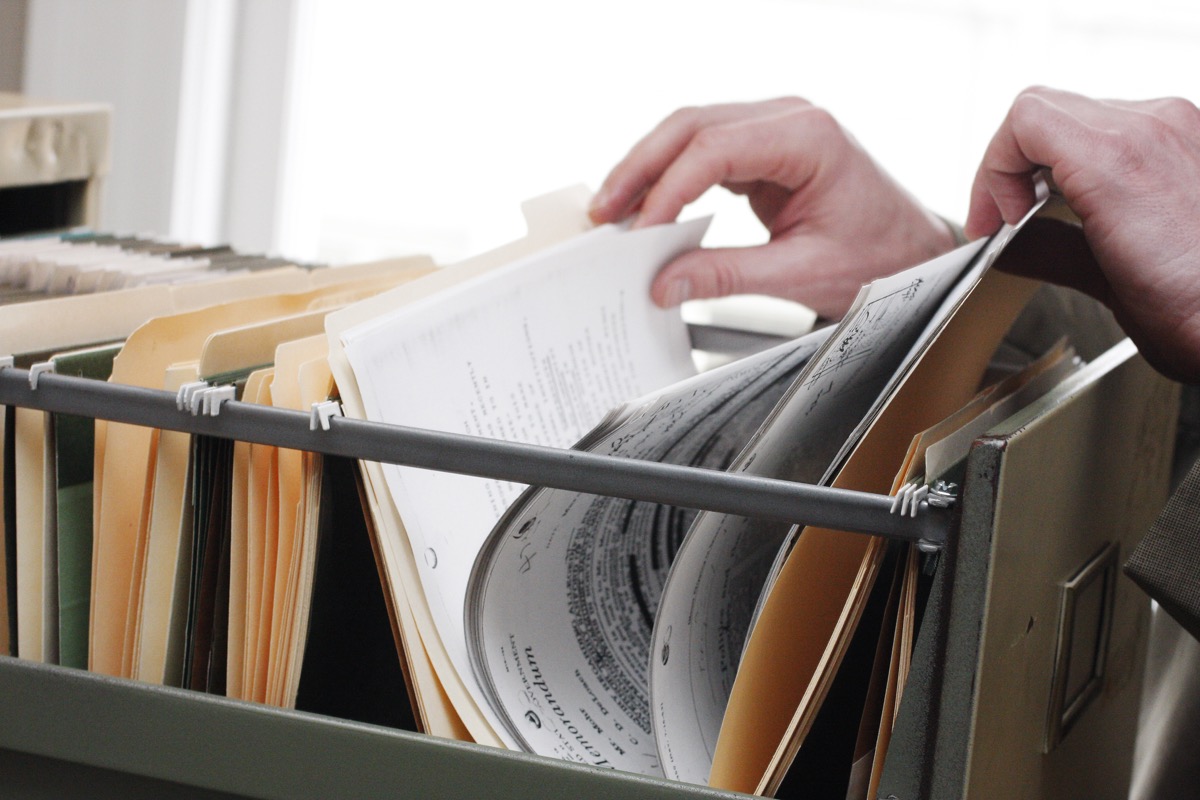 At my last seminar I taught, one of the participants spoke about his process when he started a new position. He would connect with each person who was currently receiving a report and ask if they report was essential. To his surprise, most people replied “no”.
We often generate reports because it is a process we have always done. If you’ve read any of my posts you know that I have said before (and I’ll say it again) make sure the reports are worth something! Reporting on the right thing at the right time can be lifesaving; reporting on the wrong thing or unnecessary reports may not be deadly, but certainly a waste of valuable time.
I challenge you to go around and talk to those that are receiving reports and ask them for what they use the report. Determine if there anything which is missing or would make the report more essential. Go one step further and provide additional information to those receiving reports. Maybe there is some data they never knew they truly required. Something that is so useful and beneficial to them, yet did not even cross their mind. This I believe is the true role of a good cost accountant.
Reports are key to ensuring you have relevant information to act on at any given time. They really are what can keep everything moving, but just blindly giving reports because that is what you have always done is not the strategic and can waste valuable time and money.
Categories: Cost Accounting
The Costing Value Proposition
Jun 12, 2015
 I was recently with a group of other accounting professionals at a conference for LEA http://www.leadingedgealliance.com/. During a meeting specifically for accountants involved in manufacturing, we discussed many of the issues facing American manufacturers today. The conversation was far ranging and covered many topics, some of which were the first I heard that topic specifically related to manufacturing.
During this meeting, I of course also talked about my recent issues, many of which were related to cost accounting. Quite interestingly, at the end of my conversation one of the other accountants in the group said “what’s the value proposition surrounding costing issues?” Quite frankly I had not thought of costing in those terms and I am sure my answer was incomplete as I was unprepared for that specific question.
After the meeting, I decided to focus on the value proposition in our prior costing assignments and decided the first thing to do was to settle on a definition of a value proposition. To me the most appropriate definition is, a value proposition is a promise of value to be delivered and acknowledged and a belief from the customer that value will be delivered and experienced. A value proposition can apply to an entire organization, or parts thereof, or customer accounts, or products or services.
However, as I thought more about cost accounting and the value proposition itself, it occurred to me, like most things in accounting… it depends! In my recent experience in working with costing assignments, generally the value proposition is variable depending on the nature of the issues related to costing that we are being called in to solve.
After thinking about this in greater detail, it occurred to me that there are three basic components to the costing value proposition. Each component is significantly different but all begin with incomplete, inaccurate or a nonexistent costing system.
The first situation that we run into as we consider the value proposition has to do with the company that has recently experienced some pain associated with their costing process. The pain could be restatement of profits due to inventory adjustments, it could be lost opportunities, it could be lack of knowing profitability by job or any other of a long list of pain points that could be affiliated with the costing process. From that pain point comes the need to correct the costing problems that led to the pain. In this case, the value proposition is that proper costing would eliminate the kinds of pain that a business has recently experienced because of its defective costing process.
The second component of the value proposition associated with costing has to do with the CPAs relationship with their manufacturing client and the CPAs knowledge that the client’s costing system is inadequate. In this case, no pain has been yet discovered, but the professional advisor knows that the system is incomplete or inaccurate and suggests, sometimes repeatedly, to the owner that the system be repaired. Finally more as a result of their long trusting relationship and less because the owner is aware of a huge impending problem, the owner will direct the CPA to do what is necessary to fix the problem and monitor it in the future so that no further issues will be experienced. In this case, the knowledgeable CPA advisor is using his expertise to protect his client from an unexpected and potentially expensive surprise some time in the future. No different than he does on any of the other topics when he provides advise to his client. The value is an experienced CPA advisor has helped prevent an unexpected, negative surprise to his client.
The third situation that we see occasionally associated with costing assignments, has to do with an unusual circumstance related to costing problems that requires attention to the cost system, not because there has been a recent problem, and not because the outside advisers are recommending such a change, but rather because an unusual circumstance has occurred that requires that the cost system be reviewed or revised. That could include the implementation of a new ERP system which is a great opportunity to rethink how costing is being done, or it could be a dispute between one or more management members about the accuracy and the construction of the cost system. This often requires outside assistance to resolve the dispute and bring an accurate cost system that all parties will trust and use. The value delivered here is the greater utilization of a new ERP system and the improvement in reporting management information that comes with it, or the positive resolution of the differences in managements opinions.
The concept of value proposition, is a great way to think about how proper costing can add value to many organizations today, not just manufacturing.
Categories: Cost Accounting
Two Identical Lines, Two Different Prices?
Jun 08, 2015
We have all run into a similar situation: You are at a store where an item costs $20, and then you go to another store where the same item costs $35. The same can be found in a manufacturing environment with regard to assembly lines, work centers, etc. You may have more than one line which does exactly the same thing in a process. These lines may be located right next to each other, or they may be in different cities, but they are still doing the same thing. Should they cost the same or different?
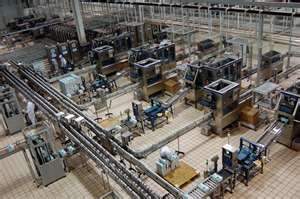 You certainly do not want to pay more for the exact same item in a store, so how can you justify a line doing the exact same thing costing more, or less? Typically when lines are side-by-side we have a hard time understanding how they would have a varying cost, but in a completely different city the difference is more difficult to justify.
One line may be newer and therefore have depreciation assigned where an older line may be fully depreciated. If you cost the lines differently, you are going to have a bottleneck at the cheaper and nothing going on at the more expensive line. Sales are not going to want their product running on the more expensive line effecting their profit margins.
If two identical lines are in two different locations, then maybe there can be some justification for a different cost, but only if the product you are creating has a different profit margin. If you are achieving the same margin and there is no difference in anything, I think the lines need to cost the same.
Two identical processes should cost the same. I am sure you are saying, “but in reality they do not.” I do not disagree, but you do need to cost them the same. This avoids swings in profit margins, and bottlenecks on the “cheaper” line. The easiest way typically to achieve this is by averaging the two (or more) costs together.
Have you had any experiences where you have not costed one or more identical lines the same? If so what happened? What did you do to fix any issues?
Categories: Cost Accounting
Presenting Variances on the Face of the Financial Statement
Jun 05, 2015
At our recent continuing professional education teaching day, we brought up the subject of presenting variances on the face of the income statement as part of the reoccurring and standard presentation. Only a few cost accountants in the room were presenting financial statements which included the variances. Many others presented the financial statements at actual and then separately prepared reports that reconciled from standard to actual results by each department and the variances created.
 We had a long dialog with several of the individuals who were showing their variances on the face of the income statement. We ultimately concluded the most logical presentation was to report the variances without trying to use the financial statement format as a means to present or analyze monthly variances.
For instance, in the labor and material category there are mix and yield variances and perhaps scrap that can be further investigated from the general cost and efficiency variances. Whether it’s mix and yield for labor; or mix, yield and scrap for material, those more detailed variances are all buried in and part of the general cost and efficiency variances that most companies compute periodically anyway.
It seemed to be the consensus for a more detailed variances analyzing discrepancies between actual results and standard results were most efficiently shown and managed in a separate detailed variance analysis. This analysis would look into each of the general variances in much greater detail. The goal is to keep the financial statements as uncluttered as possible, but still point out the broad categories of differences from a plan.
This is also true for the overhead variances. The general overhead variances of spending and volume can also be further analyzed into fixed and variable cost with a four variance analysis which can be derived from the simple two variance volume and spending. It was the consensus that this further analysis did not belong on the face of the income statement, but should be presented in a far more detailed variance analysis that would be part of and supported by the monthly financial statement.
It appears that the popular approach was to keep the monthly financial statements in high-level general terms with any detailed and analytical work being offered as a further analysis of the monthly financial statements. Although not all companies follow this general policy it seemed as though this was a consensus among those companies that did present variances as part of the reconciliation from standard to actual results on the income statement.
What practice have you used and why?
Categories: Cost Accounting