
Additional Uses For Your Cost System
Sep 04, 2015
A few days ago, I attended a board meeting with the management team of a very successful local manufacturing company. As we were reviewing our plans for 2015-2016, the topic of dashboards available to the management team was introduced. It was thought that such dashboards would result in better management of the business to achieve specific goals.
Part of the discussion was simply related to what can be done to monitor efficiencies on the shop floor and to incorporate those improvements and efficiencies into the overall plan for the next five years.
General manufacturing dashboards offer a variety of information including data related to every aspect of plant operations. However, in this case, limited options were available with regard to determining and controlling day-to-day efficiencies in the plant.
As we continued our discussion, it became apparent that their cost system (which has been useful and accurate in valuing inventories) had never been utilized to control operations. Although their automated reporting system did not include any variance reporting, the other parts of the costing system had all of the components available to implement such a reporting process.
 It became apparent their system had significant data holes which would make it difficult to analyze operations appropriately. For instance, the firm is having difficulty obtaining hourly production numbers. Workers are not clocking in and out of various jobs during the day. This leaves some jobs with no labor whatsoever and other jobs having two or three times more labor than what was actually expended. This is a common problem and one which requires disciplined plant management in order to correct.
In the early stages of variance reporting, you could rely on plant-wide efficiencies to determine overall labor efficiencies as you work towards determining job-by-job efficiencies. In order to obtain plant-wide efficiencies, the standard hours created during a given time period must be determined and then compared to the actual hours worked for the same period. Or, it could be done in dollars. Total dollars of labor at standard compared to total dollars of labor at actual. However, such a report does not provide management with a detailed summary of which jobs were profitable and those that were not. It does point to the overall accuracy of the standards and provides summary information as to the overall efficiencies in the shop. This data could useful in an environment where such reporting was never available.
At the conclusion of the meeting, it was determined that several additional dashboard reporting formats were required. I believe this discussion did set in motion processes which were required to expand the use of their costing system in the future.
Have you had similar reporting issues and what have you done to resolve them?
Categories: Cost Accounting
Understanding Variances In Multiple Operations
Aug 31, 2015
The other day, I was having lunch with a cost manager from a Fortune 500 company who is a longtime friend and for a number of years, a coworker. His firm is an international manufacturing company with numerous locations both in the US and abroad. He has senior cost responsibilities for all of North America. He spoke of the company’s recent conversion to a more sophisticated computer system and the opportunities and the challenges it presented.
As we talked about some of the bigger challenges, we dived into a discussion about the kinds of questions he fields most frequently from both senior management and plant controllers he collaborated with on a daily basis. From his perspective, many of the questions he receives are reoccurring and have to do with the same basic concepts. His plant managers often have questions regarding variances which are created in their own operations and understanding how they can be managed. Specifically, what is causing them? One of the difficult areas involves identical products being made different plants and on different types of machines. Hence, one identical product is being produced at all of the plants in North America and that product is being produced on a variety of machines at a variety of machine speeds and technical difficulties.
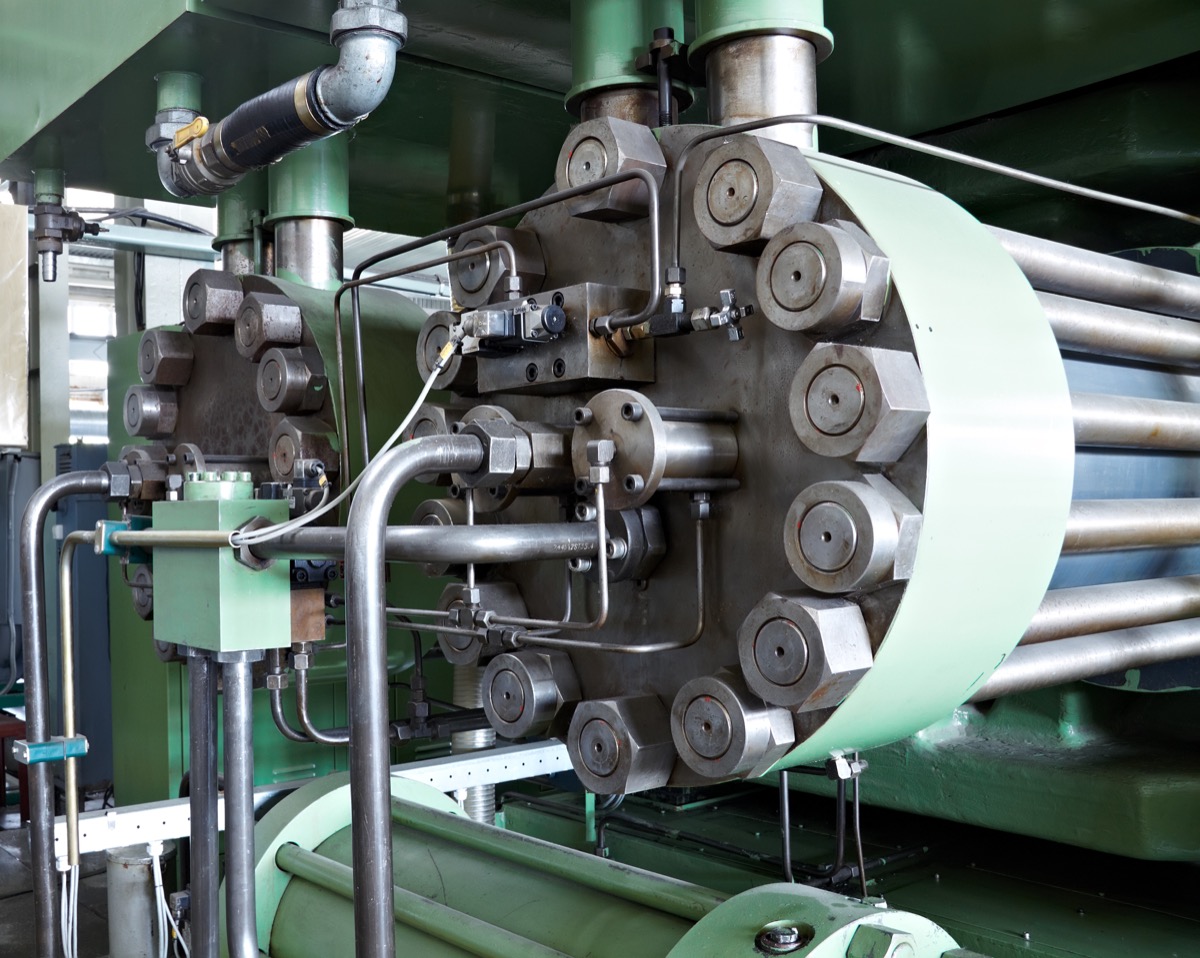 As a result, the differing speeds and machine types give rise to variances on this product: some favorable and some unfavorable. The corporation has decided to value all of their products with standards determined using the fastest machine speeds and the most efficient processes in the operation. For example if one plant has machinery that limits product A to 1,000 parts an hour and another plant has technology that allows the same part A to be produced at 2,000 an hour, and 2,000 an hour is the highest and most efficient process in the corporation, then the standards used to set the price of that product are based on 2,000 units per hour. As a result, any of those locations operating at less than 2,000 units per hour, are resulting in negative efficiencies and may be bound to do so for long periods of time. If those restrictions are caused by technological limitations, then the plant managers have little option if they are going to be directed to continue to produce that product.
This logic, I believe, speaks to the sales side and the need to be highlit competitive in a global market. If the corporation were to use the slowest machine speeds to set prices, they might find that they are competitively unable to attract the customers and therefore, are forced out of that business.
As I think back to our cost courses and forums, this was a frequent topic with a whole range of possible solutions. One case is just as I described, pricing your products and inventory using the highest, most efficient process. Some people argue the lowest, least efficient process should be used to value the product. This would create positive variances and profitability on those machines which produce the identical product at a much faster rate. I have also heard others suggest that some sort of a blended average would be the best standard to use so the highest and best rate or the lowest and worst rate, but rather a rate someplace in the middle that makes the slower machines not as bad and more efficient machines not as good.
Since each company, each product line, and each product environment is different, those decisions have to be made on a unit by unit basis by the senior management of the operation with assistance from the cost team.
Categories: Cost Accounting
Expect The Unexpected – Know Your Costs
Aug 24, 2015
I saw this adorable video on TV and now, it can be found all over the Internet. I wanted to find a way to share it, not just because I’m an animal lover, but because it relates to costing.
Have you ever been in a situation where you feel like your hands are tied? No matter what you do the end result will still be the same. This family had to remain inside while watching these adorable, yet destructive bears playing in their swimming pool. It was inevitable that the pool was going to be destroyed. I hope you are not faced with an actual life or death situation, but you may be faced with the life or death of your business.
 What if a supplier raises prices or significantly decreases order quantity? Are you equipped to handle such changes? Being able to take necessary steps to ensure the continuity of your business is critical. Hopefully, you are not like this family and are forced to sit back. However, sometimes circumstances presented leave you unable to take action. In such instances, the more prepared you are to deal with the unknown, the more likely you are to survive.
Knowing your costs and how they are derived are essential. If you have a business back-up plan and know what is needed to recover from an unforeseen change, then once it occurs, you can act quickly. If it takes 30 days or more to see the effect of a change, you may have already used a big portion of your line to survive and may end up laying people off or going out of business.
Expect the unexpected and know your costs so you can survive!
Categories: Cost Accounting
Sometimes Good Costing Information is Not Enough
Aug 21, 2015
 I recently learned that one of my long-time manufacturing clients just closed their doors. This client was in a very mature manufacturing environment where his specialty was not subject to radical technological changes. And in fact his equipment and many of his products were similar to what was being done 25 or 30 years ago. His sales volumes were highly dependent on finding and keeping new work in a highly competitive selling price environment.
From my experience, mature industries that are not subject to radical technological changes both in products and in processes, must constantly strive to improve every phase of their operation with whatever subtle technological advances there are to remain competitive. This is especially true in an industry that has a relatively low entrance costs, and one that may include operations that will actually take jobs at a loss without realizing the long-term effects to their company. The end result is that the competitors in that industry may be pricing their products so low that it is not possible to compete profitably because they don’t understand their cost.
I have seen some examples in this industry that a competitors selling price was below the raw material cost of my client without including any of the labor or overhead necessary to convert the raw material to a finished product. In effect, the competitor won the job at a price that was below the raw material cost.
This client had done a very good job of finding and holding on to profitable work and although the volumes fluctuated year to year, in good years they made significant profits and in bad years he was able to manage the losses to be minimal.
However, in the last 18 months volumes were very soft and this client was unwilling to let his very experienced staff go by layoff because he was receiving assurances from one of his major customers that substantial new volume was soon to be developed. He made his way by using capital that was expensive and with significant limits in the amount that was available. The end result was that the new volume was never delivered and he exceeded the capital available which made it impossible to continue operations.
For all the years we were together, he had a very precise view of his product cost and spent the time and money it took to keep his costing information current and relevant to his market. I believe he is one of the relatively small number of managers/owners that we work with who truly understood his costing structure and how it could be managed to improve his competitiveness in the marketplace.
I believe in this case he relied on assurances from customers and friends who were unable to deliver as was expected and therefore forced this otherwise successful company out of business and cause the unemployment of a significant number of hourly and management people.
It simply points out the complexities of today’s business environment where many factors have to be managed, considered and effectively dealt with to maintain a long-term successful company.
Categories: Cost Accounting
Myth: Our Company is Too Small For Costing
Aug 17, 2015
There is not an exact size of business, process, or product line for costing. Cost accounting does not offer a perfect mold in which you neatly place your business and all right answers appear. Every situation is unique and different and each every situation requires an in-depth review to accurately determine the best possible course of action.
All too often, I hear owners, controllers, and CEO’s, etc. say:
“Knowing our company’s costs sounds great, but I do not think we your mold. Our processes are very unique and we only sell so much in products. We are just not a good fit for your program.”
This couldn’t be further from the truth! Some costing consultants may offer solutions in a set program and attempt to force their clients into that mold. However, our costing professionals pride ourselves on not having a “cookie cutter” approach.
 No matter what size your organization, it is always important to know your costs. Obviously, the size of your company may determine the impact of costing information. It is essential to know if your company is making money and from where your costs are coming. In order to make optimum business decisions about the future direction of your organization, you must know your costs!
Some of you may say, “I know what it costs to make widget – it required 20 lbs of xyz to produce each widget and xyz is $.25 a pound, and I know it takes .50 hours to make each widget and labor is $15 an hour. So, it costs $12.50 to make each widget. If want a 40% margin, I will sell my widget for $17.50!
But do you know what is in your labor cost? Are you including cost of insurance, vacation, etc., or just average wage? Don’t forget the costs of utilities, insurance, rent, property taxes. These all impact your profitability and ultimately determine your price. What about your overhead?
It is essential to understand what drives your costs. Is your operation labor driven? Is your operation machine driven? On what basis are you allocating? If you said yes to machine driven and you are allocating on labor hour, this is a significant problem. Having a reasonable allocation base and method is critical. Otherwise, you are simply guessing.
Don’t fall victim to the myth that your company does not fit the mold of costing. Each situation is unique and requires analysis. Knowing your costs is not just limited to materials, labor and time. Other factors determine your costs. It’s time to stop guessing and truly KNOW your costs.
Categories: Cost Accounting